Older homes have a lot going for them. Established neighborhoods, mature trees, and architectural details you simply do not see in new builds can make them wonderful places to live. And since LAS has been around since 1957, we have a soft spot for things that stand the test of time.
Your windows, however, may be another story. Choosing the right replacement windows for old homes can make a big difference in comfort, efficiency, and everyday performance. Here’s what to look for when updating an older home in Louisiana.
Quick answer: What are the best replacement windows for an old house?
The best replacement window for an older Gulf South home is one that is properly sized for your existing opening and designed for our hot, humid climate.
Look for:
- A window made to fit the individual opening, which may have shifted or settled over the years
- Low-E, double-pane glass with a low Solar Heat Gain Coefficient (SHGC)
- A durable, low-maintenance frame
- Quality weatherstripping and tight seals
- Professional installation that accounts for the condition of the existing opening
- A style that fits the architecture and everyday needs of your home
- Wind or impact-rated options if storm protection is important to you
There is no single window style that is right for every older home. A 1960s ranch in Metairie may have very different priorities from an older raised home in New Orleans or a two-story house on the North Shore.
How do you know when old windows need to be replaced?
Age alone does not mean your windows have to go. If they still operate well, seal properly, and keep your home comfortable, there may be no reason to replace them. But windows usually start giving you clues when their performance is slipping.
You may notice:
- Certain rooms feel much warmer than the rest of the house
- Your A/C seems to run constantly during hot weather
- You can feel air around the window frame
- Windows are difficult to open, close, or lock
- The frames are deteriorating or pulling away from the opening
- You see recurring moisture or condensation around the window
- Double-pane windows look cloudy or fogged between the panes
- Outside noise seems especially noticeable
- Your windows no longer give you the storm protection you want
One important note about condensation: moisture on the indoor or outdoor surface of a window can happen for several reasons, including humidity and temperature differences. But if a double-pane window stays foggy between the panes of glass, that usually indicates the insulated glass seal has failed.
Here’s how to get started when replacing your old windows in Louisiana.
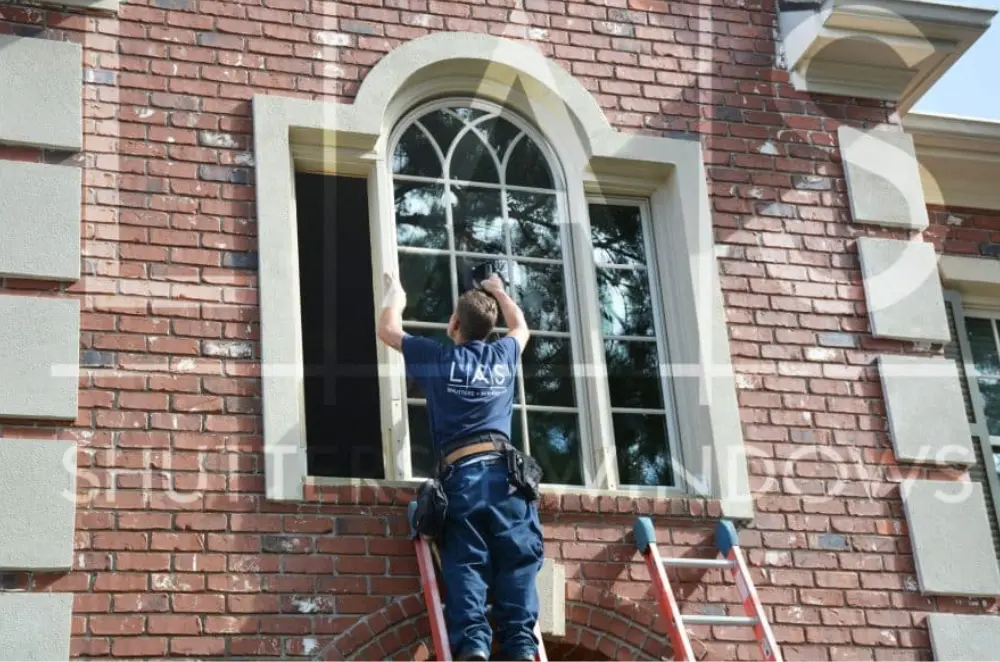
1. Start with the fit, especially in an older home
When you are replacing windows in an old house, you cannot assume the opening is still exactly the size or shape it was when the house was built.
Homes settle. Renovations happen. Previous owners make repairs. Trim gets changed. Openings that look identical from across the room may measure slightly differently once you get down to the details.
That is one reason custom sizing matters so much in an old house window replacement project.
A replacement window should work with the actual opening you have today rather than relying on the dimensions the opening was supposed to have decades ago. And in an older home, the opening may no longer match a standard size.
LAS measures each opening individually and manufactures its windows in Louisiana to fit the project. That allows us to work with the home as it exists now, including openings that may no longer be perfectly square or uniform.
2. Choose glass made for Louisiana heat
Going from an old single-pane window to a modern double-pane window can be an important upgrade, but the number of panes is only part of the story. In Louisiana, energy-efficient windows should help limit how much solar heat enters through the glass during our long, sunny afternoons.
Solar Heat Gain Coefficient, or SHGC, measures how much solar heat passes through a window. In a hot climate like ours, a lower number generally means the window is doing a better job of limiting unwanted heat gain. Low-E glass helps too. Its specialized coating is designed to manage heat transfer without requiring your home to feel dark behind heavily tinted glass.
For an older home where the A/C is already working hard, choosing glass designed for a Southern climate can help your house stay more comfortable.
3. Look closely at the frame material
Many older Louisiana homes still have aluminum windows that were installed when the home was built. They may have lasted for decades, but older aluminum frames can transfer heat easily and may no longer seal as well as they once did.
Wood can add a traditional look, but Gulf South humidity can make ongoing maintenance especially important.
A well-made vinyl window gives you another option. Vinyl does not need regular painting, and quality frames can stand up well to our heat and humidity while also providing good insulating performance.
But not every vinyl window is built the same. Ask how the frame is constructed, how the corners are joined, and how the entire system is designed to resist air and water intrusion.
4. Do not overlook weatherstripping and installation
You can buy a high-performing window and still be disappointed if the installation leaves gaps around it. In an older home, this becomes even more important because the opening itself may have changed over the years.
Good installation should address how the new window meets the existing home. The window needs to be measured correctly, leveled and secured properly, and sealed against air and water intrusion. Quality weatherstripping also helps limit unwanted airflow where the sash and frame meet.
If drafts are one of the reasons you are replacing your windows in the first place, ask your contractor how the entire opening will be sealed, not just what efficiency rating appears on the glass.
5. Think about which window style works for the room
Replacing old windows is also a chance to reconsider how you actually use them. You do not have to automatically replace every old single-hung window with another single-hung window just because that is what came with your house.
For example:
- Single-hung windows are simple, practical, and often a good fit for ground-floor rooms
- Double-hung windows allow both sashes to operate and can make exterior glass easier to clean from inside, especially upstairs
- Casement windows can work well when you want a wide opening and easy operation
- Sliding windows can make sense for wider openings or spaces where you do not want a sash projecting outward
- Picture or fixed windows can bring in more light when ventilation is not needed
- Custom-shaped windows can preserve unique arches, angles, or other nonstandard openings in older homes without sacrificing look or performance
The right choice can vary from room to room. Your replacement project should fit the way you live now, not simply recreate decisions made when your home was built.
Find inspiration for your next project in our gallery.
6. Decide whether hurricane protection should be part of the project
If you are already replacing aging windows, this is a good time to decide how you want to handle storm protection going forward.
Impact-rated hurricane windows are specifically designed to resist wind-borne debris and help protect the opening during severe weather. They can give you permanent storm protection without needing to cover the window each time a hurricane approaches.
Some homeowners choose impact windows throughout the house. Others install standard energy-efficient windows and protect them with hurricane shutters or storm panels. And some use a combination based on the size, location, and exposure of each opening.
If storm preparation has become harder over the years, think about that now rather than treating hurricane protection as a separate project later.
7. Keep the character of your home in mind
One concern we hear often with replacement windows for older homes is whether new windows will make the house look too new. They do not have to.
The goal should be to improve the way your windows perform without making them feel disconnected from the rest of your home.
Pay attention to proportions, grid patterns, frame profiles, colors, and the overall style of the house. If your home has a strong traditional look, those details can make a big difference. If you have a simpler mid-century ranch, a clean window with fewer visual elements may feel more natural.
You should not have to choose between a window that performs well and one that belongs on your house.
Should you replace every old window at once?
Not necessarily. A full-home replacement can make sense if most of your windows are the same age and experiencing similar problems. It gives you consistent appearance and performance across the house and lets you address the project in one installation.
But there is nothing wrong with working in phases. For example, if the west side of your home gets intense afternoon sun, those windows may be your first priority. You may want to address a bedroom with a draft, a living room window that will not open, or openings where you want storm protection first.
A good window company should be able to help you prioritize the project without making you feel like every window has to be replaced immediately.
Questions to ask before choosing a window replacement company
For an older home, the contractor matters just as much as the product. Before you make your decision, ask:
- Will you measure every window individually?
- What glass package do you recommend for Louisiana's climate?
- How will you evaluate and seal the existing opening?
- Do you manufacture the windows locally or buy them from another company?
- Can you provide impact-rated options?
- Can I replace the windows in phases?
- Who handles service after installation?
Why local experience matters when replacing windows in an older Louisiana home
Replacing a window in an older home is rarely just a matter of pulling one unit out and putting another one in. You are working with the home that decades of Louisiana weather, renovations, settling, and everyday life have created.
That is familiar territory for our team at LAS.
We have been manufacturing and installing windows across the Gulf South since the 1950s. Our windows are manufactured in Louisiana for the climate we live in, and our team has worked on homes from many different eras, styles, and stages of renovation.
That experience matters when an opening is a little unusual, when energy efficiency is your biggest concern, or when you are trying to improve the home without losing its character.
LAS also handles the process from measuring and manufacturing through installation and service. That means you have one local team responsible for how your windows fit, perform, and hold up over time.
Ready to give your older home some love?
LAS can take a close look at your existing windows, talk through what you want to improve, and help you compare options for your home.
Maybe that means replacing every original window. Maybe it means starting with the rooms where heat and drafts are the biggest problem. Or maybe you want to combine energy-efficient replacement windows with better hurricane protection.
We can help you build a plan that makes sense for your home now while respecting the character that made you love it in the first place.
FAQs about replacement windows for old homes
Is it worth replacing windows in an old house?▾
Yes, it can be, particularly when your current windows are drafty, difficult to operate, deteriorating, or no longer helping your home stay comfortable. Older single-pane windows may also allow more heat transfer than modern energy-efficient windows.
The condition of your existing windows matters more than age alone. A professional assessment can help you decide whether replacement makes sense.
What are the best replacement windows for an older home in Louisiana?▾
For most Louisiana homes, look for windows designed for a hot, humid Southern climate. Features such as Low-E double-pane glass, a low Solar Heat Gain Coefficient, durable vinyl frames, good weatherstripping, and proper installation can all affect performance.
The window should also be custom-fit to the existing opening and complement the style of your home.
Can you replace windows in an old house without changing the exterior?▾
In many cases, yes. A properly planned replacement project can usually preserve the overall proportions and character of your home's openings while upgrading the frame, glass, seals, and performance.
The exact approach depends on the condition and construction of the existing window and surrounding opening.
Why do my old windows keep fogging up?▾
It depends on where the moisture appears. Condensation on an indoor or outdoor glass surface can result from humidity and temperature differences.
If a double-pane window is fogging between the two panes, however, the insulated glass seal may have failed. A window professional like those at LAS can help determine whether the issue is with the glass, seals, humidity, or another part of the opening.
Are vinyl windows good for older homes?▾
Yes, especially in the Gulf South. Quality vinyl windows are low-maintenance and can perform well in Louisiana's heat and humidity. Also consider how the window is constructed, how well it fits the opening, and whether the glass is appropriate for your climate.
Should I choose single-pane or double-pane replacement windows?▾
For most replacement projects today, double-pane windows provide better insulating performance than older single-pane windows.
Do I need impact windows when replacing windows in Louisiana?▾
Not every replacement window has to be impact-rated, but every Gulf South homeowner should have a plan for storm protection. You may choose impact windows, hurricane shutters, storm panels, or a combination depending on your home, budget, and how you prefer to prepare for storms.
-
Chief Executive OfficerView all posts
Richard Maia is the Chief Executive Officer of LAS, one of the Gulf South's leading window and shutter manufacturers. A structural engineering graduate of Louisiana State University and a lifelong South Louisiana native, Richard grew up around LAS and spent summers working the floor before eventually leading the company. His engineering background shapes everything about how LAS operates: products are designed from first principles, not convention, and engineered specifically for the heat, humidity, and storm demands of the regional climate.
Under his leadership, LAS has pursued deep vertical integration by investing in in-house manufacturing capabilities to maintain tighter control over quality, sourcing, and timelines. A graduate of Jesuit High School in New Orleans, Richard brings both technical rigor and genuine local roots to a company he has built around one straightforward belief: that a lifetime warranty only means something if the company is still around to honor it.